
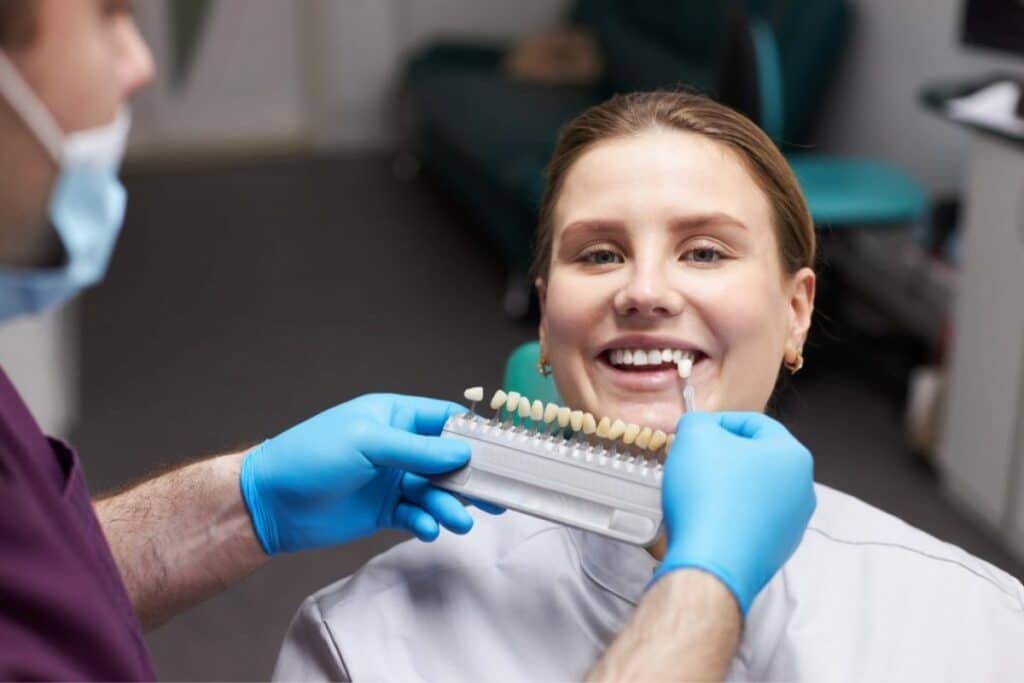
A radiant smile is about more than appearance; it’s about feeling good in every interaction. Many people choose veneers to cover chips, gaps, or discoloration and create a brighter, balanced look. Veneers are thin shells bonded to the front of teeth and are one of the most reliable treatments in cosmetic dentistry. Still, one common concern patients often share is staining.
Can veneers stain? Do they lose their shine with time? While they are designed to resist staining, certain habits and materials may cause changes in brightness. This guide will walk you through the causes, prevention strategies, and care tips to help you keep your porcelain teeth shells looking natural and glowing for years.
Can Veneers Get Stained?
The short answer is yes. Veneers can pick up stains, but are far more resistant than natural enamel. Real teeth are porous, which means pigments from coffee, red wine, or tea can seep in and change their color. Porcelain tooth coverings, especially when made from porcelain, are nonporous and hold their shade much better.
That said, they are not entirely immune. The bonding cement around the edges may discolor over time, making these restorations appear darker. Patients who choose high-quality porcelain veneers usually notice fewer problems because the material is built to resist staining and maintain brightness.
The Causes of Veneer Staining
To care for veneers, it helps to understand what causes staining in the first place. Here are the most common reasons:
Dark drinks and foods: Coffee, tea, soda, wine, and berries are the main stain sources. Even soy sauce or tomato-based meals may cause staining if consumed often.
Tobacco use: Cigarettes, cigars, and chewing tobacco create a stubborn stain that is hard to remove and often dulls the brightness of porcelain.
Oral hygiene: If brushing and flossing are irregular, buildup occurs along the gumline and edges. This buildup holds pigments that may cause staining.
Bonding material: While porcelain resists stains, the cement used to bond these porcelain tooth shells can discolor, creating contrast with the shells themselves.
Old Restorations: Over time, wear and small scratches on the surface may hold stains more easily than when they were new.
Knowing these causes allows you to adjust your daily routine to prevent staining before it begins.
How to Keep Veneers White for Long?
Keeping these restorations white is easier than many expect. With the right habits, they can look natural for many years. Here are the most effective tips:
- Brush daily with a soft-bristled toothbrush and nonabrasive toothpaste. This removes buildup that can cause a stain.
- Floss once daily to clean between teeth and prevent staining at the edges.
- Rinse after meals if you drink coffee, tea, or red wine. A quick rinse reduces staining effects.
- Avoid tobacco to protect not only the porcelain tooth shells but also your gums and overall health.
- Eat a balanced diet with crunchy fruits and vegetables that naturally clean your teeth.
- See your dentist regularly for cleanings and checkups. Professionals can polish veneers and catch staining early.
These steps may sound simple, but they protect your smile. Consistency is the key.
Is It Possible to Whiten Stained Veneers?
This is one of the most common questions patients ask. Whitening products sold in stores are designed for natural enamel, not porcelain. That means they do not change the shade of these tooth restorations. In some cases, over-the-counter whitening agents can even create uneven color by whitening the surrounding natural teeth but not the veneers.
So, What Can Be Done If You Notice Staining?
Professional cleanings: Dentists can remove surface stains with polishing tools.
Replacement: If they are old or deeply stained, replacing them may be the only solution to restore brightness.
Careful monitoring: Sometimes, staining may not be from the porcelain but the cement around the edges. A dentist can check and address this issue.
If you notice changes in your porcelain teeth shells, the safest step is to ask your dentist for guidance. They can suggest the best solution without risking damage to your smile.
Why Are Porcelain Veneers Still a Good Choice?
Even with the possibility of staining over time, porcelain remains the gold standard for cosmetic restorations. There are several reasons why porcelain is preferred:
Natural look: Porcelain reflects light like real enamel, so your smile looks authentic.
Durability: With proper care, porcelain teeth coverings can last over a decade.
Resistance to staining: Compared to other materials, porcelain does not absorb stains easily.
Confidence boost: Many patients feel more at ease after treatment in social and professional settings.
Choosing high-quality porcelain veneers ensures you invest in a treatment that balances function and beauty. With proper maintenance, porcelain will keep your smile bright for years.
Keep Your Veneers Bright and Confident
Staining may sound like a worry, but porcelain tooth shells stay bright and beautiful with good habits and regular care. Brushing daily, rinsing after dark drinks, and visiting your dentist for checkups make a difference. Professional care can refresh your smile even if some stains appear over time.
If you are considering porcelain veneers or want to know the best ways to care for your current set, Heritage Family Dentistry is here to help.
Our team offers guidance, preventive care, and treatment to keep your tooth restorations in excellent condition. Don’t wait for staining to dull your confidence; visit this dental office today and take the first step toward a lasting, radiant smile.
Don’t just take our word for it—check out our happy patients’ Google reviews to see why they trust us!
FAQs About Veneers and Staining
1. Can veneers get stained like natural teeth?
Porcelain veneers resist staining better than natural enamel but aren’t completely stain-proof. Over time, the bonding cement or minor scratches on the surface may hold stains. With good care, veneers usually stay bright much longer than natural teeth.
2. How long do porcelain veneers usually last?
With proper brushing, flossing, and regular dental visits, porcelain veneers can last 10–15 years or more. Longevity depends on your habits, diet, and overall oral health. Avoiding tobacco and limiting dark drinks helps extend their lifespan.
3. Can I whiten my veneers at home with regular whitening kits?
No. Whitening products are designed for natural enamel and won’t change the shade of porcelain veneers. Using them may create uneven color between your veneers and natural teeth. Professional cleaning or replacement is the safer option.
4. What foods or drinks should I avoid to prevent veneer staining?
Limit coffee, tea, red wine, soda, and dark sauces like soy or tomato-based dishes. These foods don’t stain porcelain easily, but can discolor bonding cement or buildup around veneers. Rinsing after meals helps prevent this.
5. Do veneers require special cleaning products?
Not at all. A soft-bristled toothbrush, nonabrasive toothpaste, and daily flossing are enough to keep veneers clean. Regular checkups with your dentist allow for polishing and early detection of any staining or wear.