
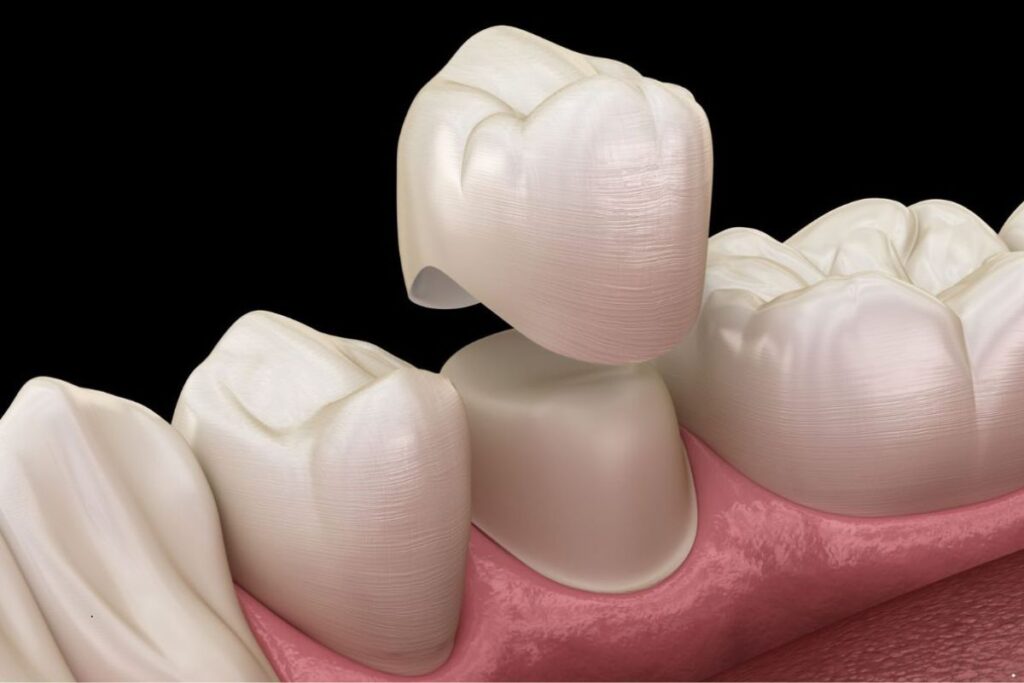
A dental crown is designed to restore and protect a damaged tooth, but it is not necessarily a lifetime restoration. Over the years, normal chewing, changes in your bite, wear, oral hygiene, and problems around the underlying tooth can affect how well a crown continues to function.
If you have had the same crown for years, you may wonder how to tell when it needs attention. Some warning signs are obvious, while others are easy to dismiss.
For patients looking for crowns in North Dallas, knowing what to watch for can help you contact a dentist before a small problem develops into a more complicated one.
How Long Should a Dental Crown Last?
There is no exact expiration date for every dental crown.
A crown’s lifespan depends on several factors, including the material used, the condition of the underlying tooth, your bite, oral hygiene, grinding or clenching habits, and how well the restoration is maintained.
Heritage Family Dentistry explains that crowns are used to restore the shape, strength, size, appearance, and function of damaged teeth. Crowns may be recommended when a tooth is cracked, severely worn, or extensively damaged by decay.
Instead of replacing a crown simply because it has reached a certain age, your dentist can evaluate its condition during routine examinations.
6 Signs Your Crown May Need Attention
1. Your Crown Feels Loose
A crown should remain securely attached to the prepared tooth.
If you notice movement when you touch the crown with your tongue or while chewing, schedule a dental examination. A loose crown can allow bacteria and food particles to enter areas that should remain protected.
Do not try to glue the crown back yourself. A dentist needs to determine why it became loose and whether the crown can be repaired or needs replacement.
2. You Notice Pain or Increasing Sensitivity
A crown itself does not have nerves, but the tooth underneath and the surrounding tissues can still develop problems.
New sensitivity to hot or cold, discomfort when biting, or persistent pain around a crowned tooth deserves professional evaluation.
Pain does not automatically mean the crown needs to be replaced. The cause could involve the underlying tooth, surrounding gum tissue, your bite, or another dental issue.
That is why an examination is more useful than assuming the crown is the problem.
3. Your Crown Is Cracked or Chipped
Dental crowns are made to withstand normal chewing, but they can still become damaged.
A small cosmetic chip may be different from a crack that affects the structural integrity of the restoration. If a piece of your crown breaks off, avoid chewing hard foods on that side until your dentist has evaluated it.
Bring any piece that has broken off with you if possible.
Your dentist can determine whether the restoration can be repaired or whether a replacement is more appropriate.
4. Your Bite Suddenly Feels Different
Your teeth should come together comfortably when you bite.
If a crowned tooth suddenly feels higher than the others, contacts your opposing tooth differently, or makes chewing uncomfortable, tell your dentist.
Sometimes the issue is a simple bite adjustment. In other cases, the crown or underlying tooth may require more extensive evaluation.
Do not continue using a restoration that consistently feels uncomfortable just because there is no severe pain.
5. The Gum Around the Crown Is Changing
Pay attention to the tissue around a crowned tooth.
Redness, swelling, tenderness, bleeding, or gum recession around the restoration should be evaluated. These changes can have several causes, including plaque accumulation, gum disease, irritation, or problems involving the crown’s fit.
Good home care is important, but it cannot replace professional evaluation when the tissue around a restoration changes.
6. The Crown No Longer Looks Right
A crown may remain structurally functional while becoming noticeably different in appearance from neighboring teeth.
This can happen as natural teeth change color over time, while the crown itself does not whiten in the same way. A damaged or visibly worn restoration can also affect the appearance of your smile.
If appearance is your primary concern, your dentist can discuss whether replacement is appropriate and what restoration options may be suitable.
Can a Dentist Repair a Crown Instead of Replacing It?
Sometimes.
The appropriate solution depends on what has happened to the crown and the condition of the tooth underneath it.
A dentist may determine that an adjustment or repair is reasonable. In other situations, replacing the restoration may provide a more predictable result.
This is especially important if the underlying tooth has developed decay, a crack, or another structural problem. The dentist needs to evaluate the entire situation rather than focusing only on the visible crown.
What Happens During a Crown Evaluation?
A crown evaluation generally begins with a discussion of what you have noticed.
Your dentist may then examine the crown, surrounding gums, neighboring teeth, and your bite. Depending on your symptoms and clinical findings, dental imaging may also be appropriate.
Heritage Family Dentistry’s North Dallas services include crowns, routine dental care, fillings, root canals, bridges, and dental implants.
That broader range of restorative services can be useful when the condition of the tooth underneath an existing crown needs to be considered.
How Can You Protect an Existing Crown?
Good habits can help your restoration remain functional for as long as possible.
Consider these everyday practices:
- Brush twice daily with fluoride toothpaste.
- Clean carefully around the gumline.
- Floss or use an appropriate interdental cleaner every day.
- Avoid chewing extremely hard objects.
- Tell your dentist if you grind or clench your teeth.
- Keep recommended dental examinations.
- Contact your dentist if the crown changes, hurts, chips, or becomes loose.
A crown should be treated as part of your overall dental care—not as a reason to stop monitoring the tooth.
When Should You See a North Dallas Dentist?
Do not wait for severe pain before having an older crown evaluated.
A loose restoration, new sensitivity, visible damage, gum changes, or a sudden bite change are all reasonable reasons to contact your dental office.
Heritage Family Dentistry has served the North Dallas community since 2008 and provides restorative dental services including crowns. Its North Dallas office is located at 18111 Preston Rd, Suite 100, Dallas, TX 75252.
If your crown has started to feel different, an examination can help determine whether it needs an adjustment, repair, monitoring, or replacement.
If you are concerned about an existing crown, contact Heritage Family Dentistry in North Dallas to schedule an evaluation and learn what treatment makes sense for your tooth.
FAQs
How do I know if my dental crown needs to be replaced?
Common warning signs include looseness, cracking, persistent discomfort, changes in your bite, gum changes, or visible deterioration. Your dentist can determine whether replacement is actually necessary.
Can a loose dental crown be saved?
Sometimes. A dentist must first determine why the crown became loose and assess the condition of the crown and underlying tooth.
Is pain under a crown always a sign that the crown is failing?
No. Pain can have several causes, including problems with the underlying tooth, gums, bite, or surrounding structures. Professional evaluation is needed to identify the cause.
How often should an old dental crown be checked?
Existing crowns can be evaluated during routine dental examinations. Your dentist can recommend how frequently your particular restoration should be monitored.
Can a chipped crown be repaired?
In some situations, repair may be possible. The appropriate treatment depends on the size and location of the damage and the condition of the crown and underlying tooth.