
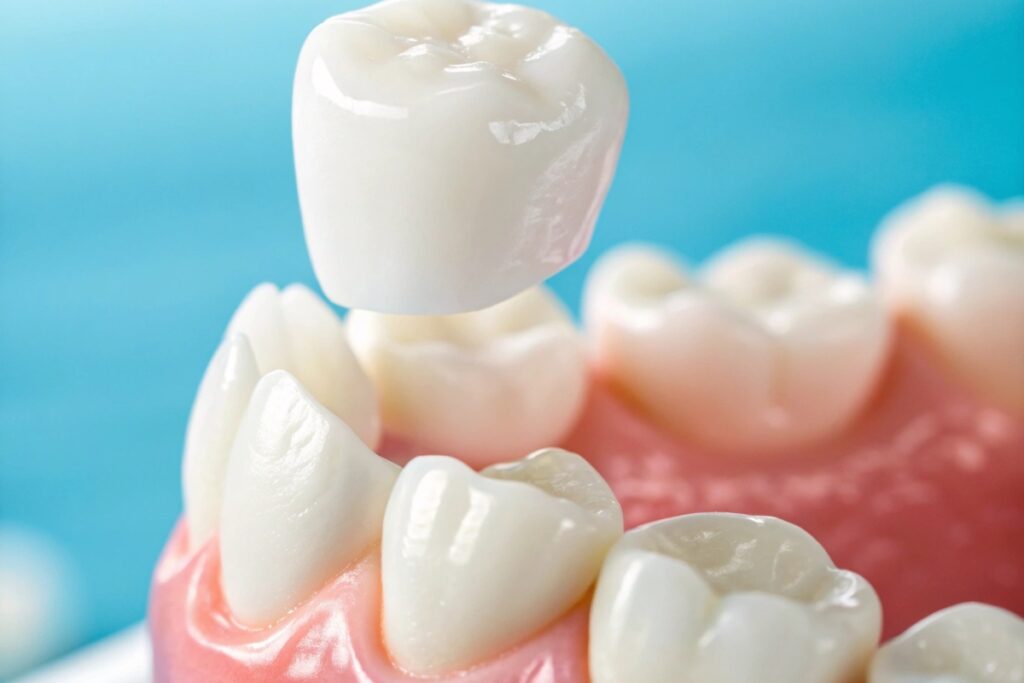
A root canal is often the best solution to save a tooth that’s been severely damaged or infected. While this treatment removes infection and preserves your natural tooth, it also leaves the tooth fragile and vulnerable to fractures. This is where a dental crown becomes essential. By placing a crown over the treated tooth, you not only restore its strength and function but also protect your smile from future damage. In this blog, we’ll explore why getting a dental crown after a root canal is crucial for long-term oral health and a confident, radiant smile.
What is Dental Crown Treatment?
Dental crown treatment involves placing a cap or “crown” over a damaged tooth to restore its shape, strength, and function. Crowns are designed to mimic the natural appearance of teeth, ensuring a seamless look. They can be made from various materials, including porcelain, ceramic, metal, or zirconia, depending on your needs and preferences.
When is this Recommended?
Crowns are often recommended for teeth that have undergone root canal therapy, have large fillings, or are cracked or worn down. They protect the tooth from further damage while restoring its function.
What Happens to a Tooth After a Root Canal?
After a root canal, the tooth’s internal pulp is removed, leaving it hollow and more fragile. Although the infection is gone, the tooth’s structural integrity is compromised.
Risk of Fractures
Without proper restoration, the tooth can easily crack or break under pressure from chewing or accidental impact.
Reduced Functionality
A weakened tooth may not perform optimally for biting or chewing, which can affect your overall oral health and comfort.
How Dental Crowns Protect and Restore Your Tooth
A dental crown serves as a protective barrier over a treated tooth, restoring both its strength and natural appearance. By covering the tooth, crowns help evenly distribute chewing forces, preventing fractures and ensuring long-lasting durability. With proper care, a dental crown can last 10 to 15 years or even longer, making it a reliable long-term solution for maintaining tooth integrity.
In addition to strength, modern crowns are carefully customized to match the color, size, and shape of your natural teeth. This ensures the crown blends seamlessly with your smile, providing a natural, aesthetically pleasing look. Beyond aesthetics, crowns play a crucial role in protecting the tooth from further damage. By sealing the tooth, they prevent bacteria from entering the treated area, reducing the risk of decay or reinfection and helping maintain long-term oral health.
Benefits of Dental Crowns After Root Canal Therapy
Investing in a dental crown after root canal therapy provides multiple benefits:
-
Restored Strength: Protects the tooth from fractures and wear.
-
Improved Functionality: Enables normal biting and chewing.
-
Enhanced Aesthetics: Maintains a natural, beautiful smile.
-
Longevity: Extends the lifespan of the treated tooth.
-
Protection from Infection: Keeps bacteria out and reduces the risk of future dental problems.
Types of Dental Crowns Available
Selecting the right crown depends on your tooth’s location, condition, and personal preferences.
-
Porcelain Crowns: Highly aesthetic, ideal for front teeth.
-
Metal Crowns: Extremely durable and suitable for molars.
-
Ceramic/Zirconia Crowns: Combines strength and a natural look.
Your dentist will recommend the best option to ensure both protection and a natural appearance.
Caring for Your Crown After a Root Canal
Proper care can significantly extend the life of your crown:
Maintain Proper Oral Hygiene
Brushing twice a day and gently flossing around your crown help prevent plaque buildup and protect the tooth from decay. Use a soft-bristled toothbrush to avoid damaging the crown. Rinsing with an antiseptic mouthwash can further reduce bacteria. Consistent care ensures your crown lasts for years without complications.
Avoid Hard or Sticky Foods
Chewing ice, hard candies, or sticky foods can damage or loosen your crown. Be mindful of what you eat, especially during the first few weeks after placement. Cutting hard foods into smaller pieces can also reduce stress on the crown. Proper care helps maintain the crown’s strength and longevity.
Schedule Regular Dental Checkups
Routine visits to your dentist allow for professional cleaning and early detection of any issues. Your dentist can check the crown’s fit, integrity, and overall oral health. Early intervention can prevent complications such as cracks or decay. Routine checkups are key to long-term success.
Protect Against Teeth Grinding
If you grind or clench your teeth, wearing a night guard can protect your crown from excessive pressure. Grinding can cause cracks or prematurely wear down the crown. Discuss your habits with your dentist for customized protection. Preventing damage keeps your crown durable and functional.
Protect Your Smile Today
A root canal saves your natural tooth, but dental crown treatment ensures it remains strong, functional, and beautiful. In North Dallas, TX, Heritage Family Dentistry offers expert care and customized solutions to protect your smile. Don’t risk tooth fractures or future complications. Schedule your consultation today and give your tooth the protection it deserves!
FAQs About Dental Crown Treatment After a Root Canal
-
Do all root canal teeth need a crown?
Most molars and heavily restored teeth require crowns for protection. -
How long does it take to get a crown after a root canal?
Typically 1–2 weeks, though some offices offer same-day crowns. -
Are crowns painful?
No, the procedure is generally painless with local anesthesia. -
Can a crown last a lifetime?
With proper care, crowns can last 10–15 years or longer. -
What materials are crowns made from?
Porcelain, ceramic, metal, or zirconia. -
Will my crown look natural?
Yes, crowns are customized to blend seamlessly with your teeth. -
Does insurance cover dental crown treatment?
Many insurance plans provide partial coverage; check with your provider.