
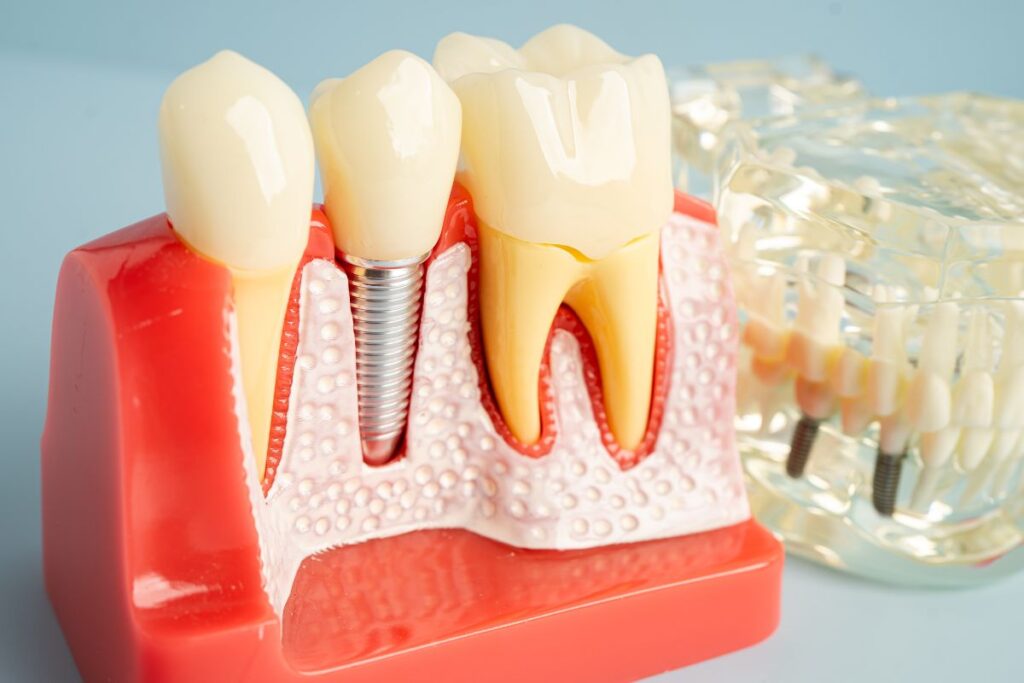
Losing a single tooth can already affect your comfort, confidence, and ability to chew properly. When two teeth next to each other are missing, those challenges can feel even more noticeable. It’s natural to wonder whether both teeth can be replaced with dental implants or if doing so might lead to complications.
Fortunately, this is a situation dentists commonly treat. Learning how adjacent dental implants work can provide clarity on the process and help you feel more confident in making the right decision for your smile.
Is It Safe to Place Two Implants Next to Each Other?
Yes, two dental implants can safely be placed next to each other. Each implant is individually positioned in the jawbone and functions as an artificial tooth root.
As long as there is:
- Adequate bone density
- Proper spacing between implants
- Healthy surrounding gum tissue
Two implants can heal successfully and function just like natural teeth.
Why Bone Health and Spacing Matter
Healthy jawbone structure is essential for implant stability. When teeth are missing for a long period, the bone in that area can gradually shrink.
For adjacent implants, there must be sufficient bone around and between them to support proper healing. If bone loss has occurred, procedures such as bone grafting may be recommended before implant placement. Careful evaluation helps reduce complications and improve long-term success.
How the Procedure Works for Adjacent Implants
The process is carefully planned to ensure stability and long-term comfort.
Step 1: Comprehensive Evaluation
Dentists perform a thorough exam and take advanced imaging to assess bone health, spacing, and bite alignment.
Step 2: Personalized Treatment Planning
Then design a customized plan to determine the ideal placement for each implant.
Step 3: Implant Placement
Each implant is precisely placed in the jawbone. Special attention is given to spacing and support so that both implants heal properly.
Step 4: Healing and Integration
Over the next few months, the implants fuse with the jawbone in a process called osseointegration.
Step 5: Final Restoration
Once healing is complete, custom-made crowns are attached, restoring your smile’s natural look and function.
Benefits of Multiple Implants
Choosing two dental implants placed side by side offers several important advantages:
Improved Functionality: Multiple implants restore strong biting and chewing ability, allowing you to comfortably enjoy a wide variety of foods without worry.
Natural Appearance: Implant-supported crowns are custom-designed to match your surrounding teeth, helping you smile with confidence in any setting.
Long-Term Stability: With proper care and regular dental visits, implants can last for many years, providing dependable support and lasting peace of mind.
Bring Back Your Teeth and Confidence with Implants
If you’re exploring Adjacent Dental Implants, Heritage Family Dentistry is ready to help you reclaim a strong, confident smile. Our experienced dental team provides personalized care tailored to your unique needs.
Contact us today at our Frisco office to discuss your treatment options and know how dental implants can improve both function and appearance. Take the first step toward a lasting, healthy smile with us.
FAQs About Adjacent Dental Implants
1. Can two dental implants be placed next to each other?
Yes, two dental implants can safely be placed side by side when there is sufficient healthy jawbone and proper spacing. Each implant is positioned individually to function as a separate artificial tooth root. With careful planning and precise placement, adjacent implants can feel and function just like natural teeth.
2. Is placing two implants more complicated than placing one?
Placing two implants requires detailed evaluation and precise positioning, but it is a common and predictable procedure. Dentists use advanced imaging to assess bone structure and spacing before treatment begins. In most cases, the process is only slightly more involved than placing a single implant.
3. How long does it take for two implants to heal?
Healing time varies from person to person, but having two implants placed does not usually double recovery time. Mild swelling or soreness may occur for a few days after the procedure. Complete healing and bone integration typically take a few months before the final crowns are attached.
4. Are two implants better than a dental bridge for missing teeth?
Dental implants are independent restorations and do not rely on neighboring teeth for support. In contrast, a dental bridge often requires reshaping healthy adjacent teeth. Many patients prefer implants because they help preserve jawbone health and offer a long-term, stable solution.
5. What if there isn’t enough bone to support two implants?
If there is insufficient bone in the area, your dentist may recommend a bone grafting procedure. This helps rebuild the jawbone, creating a strong foundation for implant placement. Proper preparation significantly improves stability and long-term success.
6. Will two adjacent implants look natural?
Yes, implant crowns are custom-designed to blend seamlessly with your surrounding teeth. They are carefully matched in color, size, and shape for a natural appearance. Once healed, most patients find they look and feel just like real teeth.
7. Who is a good candidate for two dental implants?
Good candidates typically have healthy gums, adequate jawbone support, and good overall oral hygiene. Even if some bone loss is present, additional treatments may make implants possible. A comprehensive dental evaluation is the best way to determine if adjacent implants are right for you.